


 cn
cn
Home
> News > As Precision Demands for Flexible Board Manufacturing Climb, hanputek's "Front-Load + Dedicated + Full-Inspection" Offers a Practical Reference
As Precision Demands for Flexible Board Manufacturing Climb, hanputek's "Front-Load + Dedicated + Full-Inspection" Offers a Practical Reference
 2026.07.02
 271
271As smart hardware continues to evolve toward "lighter, thinner, and more flexible," traditional rigid circuit boards are gradually reaching their limits when confronted with constraints of space and deformation. The hinges connecting screens in phones and laptops, the cramped cavities housing batteries and camera modules, wearable devices that conform to the human body, automotive components that must withstand vibration, medical equipment demanding high reliability, and even the nimbly bending joints of robots—these scenarios impose a common requirement on circuit boards: achieving bendable, foldable connections within extremely limited space.
 The flexible printed circuit board (FPC), precisely because of its ability to route freely in three-dimensional space and flex dynamically without easily breaking, has become a well-established solution across the fields above. Yet the manufacturing challenges of flexible boards stem from that very "flexibility": the substrate is thin and easily deformed, making components prone to misalignment during placement; the soldering thermal window is narrow, so even slight temperature deviations can cause cold joints or tombstoning; and stress concentrates in the dynamic bending zones, continuously testing the durability of solder joints and traces over long-term use. This means that directly transplanting proven rigid-board experience onto flexible boards often fails to work—the fixture design, temperature profiles, and inspection standards must all be re-refined.
With fifteen years of dedication to electronic manufacturing services, hanputek has accumulated a set of solutions in its flexible-board deployment practices that can serve as a reference for the PCBA industry, the core of which can be summarized as three strategies: "front-loading," "dedicated customization," and "full inspection."
First, "front-loading"—resolving risks at the design end. A representative from hanputek noted that the company engages as early as the PCB Layout and signal-integrity simulation stages, using DFM/DFA analysis to identify potential problems in flexible-board routing and bending zones in advance, resolving risks at the design end rather than at the tail of the production line, thereby reducing rework and losses in subsequent manufacturing stages at the source.
Second, "dedicated customization"—tailoring exclusive processes for flexible substrates. "In response to the characteristics of flexible-board substrates, hanputek specifically customizes carrier fixtures, optimizes reflow temperature profiles, and treats 0201/0402 fine-pitch placement, BGA/QFN precision packaging, and SMT/through-hole mixed assembly differently, using finely tuned parameters to address the process variables introduced by flexible materials," the representative further explained.
Third, "full inspection"—multiple layers of quality control that leave no blind spots. On hanputek's production lines, complete equipment such as AOI optical inspection, X-Ray imaging, flying-probe testing, ICT in-circuit testing, first-article inspection, and functional testing is arranged in orderly fashion, forming the company's multi-layered quality-control system. This covers hidden defects on flexible boards that are difficult to detect with the naked eye, ensuring that every board leaving the factory has traceable and verifiable quality.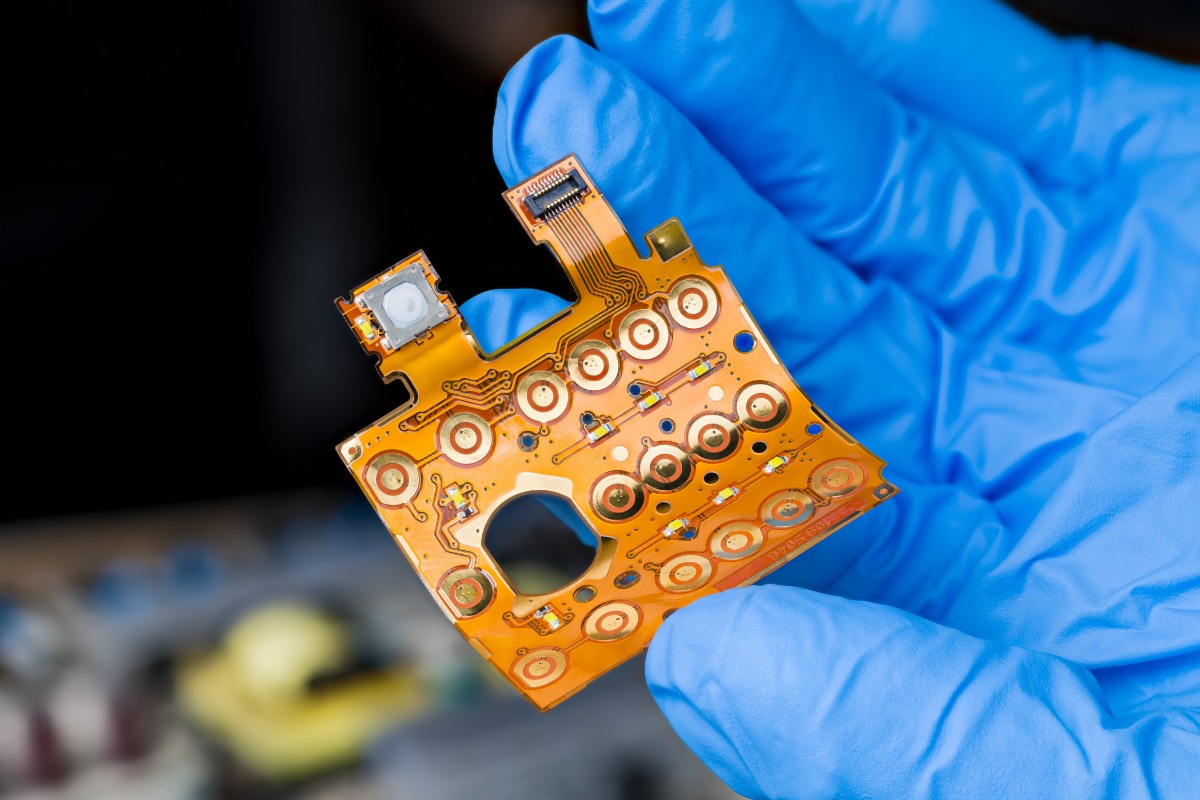 Underpinning these practices is a complete set of systematic capabilities. Relying on SMT factories in Shenzhen and elsewhere across the Pearl River Delta, hanputek achieves a smooth transition from rapid prototyping and small-batch trial production to large-scale mass production; meanwhile, its three information systems—quotation, customer collaboration, and project management—keep a complete record of every project's material and process issues, striving to prevent the recurrence of similar defects. At the standards level, the company holds ISO 9001, ISO 13485, IATF 16949, and RoHS certifications, with processes aligned to IPC-A-610 Class II/III, providing a consistent quality baseline for various industries such as consumer electronics, medical, automotive, and industrial control. As a one-stop PCBA solution provider of considerable scale, hanputek connects every link of design, manufacturing, inspection, and delivery, offering full-chain support for flexible-board projects.
Afterword:
Looking back on the journey of flexible-board deployment, flexible manufacturing offers no once-and-for-all standard answer; every new form and new substrate means new process variables. The hanputek representative noted that the company, too, has continuously calibrated through trial-and-error and review, ultimately arriving at the mature and widely adopted "hanputek solution." It is precisely for this reason that hanputek maintains process iteration and open industry exchange—for example, being honored as a "Specialized, Refined, Distinctive, and Innovative" (little-giant) enterprise and appearing at electronica China (Munich Shanghai Electronics Show). As technology sectors such as foldable screens, smart wearables, automotive electronics, and humanoid robots develop rapidly, the stage for flexible boards continues to expand. With its "front-load + dedicated + full-inspection" hanputek solution, the company provides more reliable one-stop flexible-board manufacturing services to smart-hardware companies worldwide, supporting the "lighter, thinner, more flexible" advancement of technology products. About hanputek
hanputek has devoted fifteen years to electronic manufacturing services, with capabilities that now fully cover the entire PCBA workflow—from PCB design and simulation, component sourcing, and SMT placement to assembly and testing. Headquartered in Shenzhen, the company operates professional SMT factories across the Pearl River Delta, equipped with multiple production lines and 18-zone nitrogen reflow ovens, capable of handling everything from 0201 micro-components to various packages such as large BGA and QFN. Its self-developed IT information system runs throughout the entire quotation, collaboration, and project-management process, ensuring that the process parameters and quality data of every flexible-board project are completely documented and fully traceable. Backed by multiple system certifications including ISO 9001, ISO 13485, and IATF 16949, as well as process standards aligned with IPC-A-610 Class II/III, hanputek has accumulated hands-on experience across thousands of flexible-board projects in fields such as consumer electronics, medical devices, automotive electronics, and industrial control.
With fifteen years of dedication to electronic manufacturing services, hanputek has accumulated a set of solutions in its flexible-board deployment practices that can serve as a reference for the PCBA industry, the core of which can be summarized as three strategies: "front-loading," "dedicated customization," and "full inspection."
First, "front-loading"—resolving risks at the design end. A representative from hanputek noted that the company engages as early as the PCB Layout and signal-integrity simulation stages, using DFM/DFA analysis to identify potential problems in flexible-board routing and bending zones in advance, resolving risks at the design end rather than at the tail of the production line, thereby reducing rework and losses in subsequent manufacturing stages at the source.
Second, "dedicated customization"—tailoring exclusive processes for flexible substrates. "In response to the characteristics of flexible-board substrates, hanputek specifically customizes carrier fixtures, optimizes reflow temperature profiles, and treats 0201/0402 fine-pitch placement, BGA/QFN precision packaging, and SMT/through-hole mixed assembly differently, using finely tuned parameters to address the process variables introduced by flexible materials," the representative further explained.
Third, "full inspection"—multiple layers of quality control that leave no blind spots. On hanputek's production lines, complete equipment such as AOI optical inspection, X-Ray imaging, flying-probe testing, ICT in-circuit testing, first-article inspection, and functional testing is arranged in orderly fashion, forming the company's multi-layered quality-control system. This covers hidden defects on flexible boards that are difficult to detect with the naked eye, ensuring that every board leaving the factory has traceable and verifiable quality.
Afterword:
Looking back on the journey of flexible-board deployment, flexible manufacturing offers no once-and-for-all standard answer; every new form and new substrate means new process variables. The hanputek representative noted that the company, too, has continuously calibrated through trial-and-error and review, ultimately arriving at the mature and widely adopted "hanputek solution." It is precisely for this reason that hanputek maintains process iteration and open industry exchange—for example, being honored as a "Specialized, Refined, Distinctive, and Innovative" (little-giant) enterprise and appearing at electronica China (Munich Shanghai Electronics Show). As technology sectors such as foldable screens, smart wearables, automotive electronics, and humanoid robots develop rapidly, the stage for flexible boards continues to expand. With its "front-load + dedicated + full-inspection" hanputek solution, the company provides more reliable one-stop flexible-board manufacturing services to smart-hardware companies worldwide, supporting the "lighter, thinner, more flexible" advancement of technology products.
hanputek has devoted fifteen years to electronic manufacturing services, with capabilities that now fully cover the entire PCBA workflow—from PCB design and simulation, component sourcing, and SMT placement to assembly and testing. Headquartered in Shenzhen, the company operates professional SMT factories across the Pearl River Delta, equipped with multiple production lines and 18-zone nitrogen reflow ovens, capable of handling everything from 0201 micro-components to various packages such as large BGA and QFN. Its self-developed IT information system runs throughout the entire quotation, collaboration, and project-management process, ensuring that the process parameters and quality data of every flexible-board project are completely documented and fully traceable. Backed by multiple system certifications including ISO 9001, ISO 13485, and IATF 16949, as well as process standards aligned with IPC-A-610 Class II/III, hanputek has accumulated hands-on experience across thousands of flexible-board projects in fields such as consumer electronics, medical devices, automotive electronics, and industrial control.

Contact information


Services
Industries
News
About Us